Pecos National Historical Park is a historic find that’s been “on the move” and destined for greatness for decades. In fact, the park had the highest visitation on record in 2021. First established as a state monument in 1935, the park about 20 miles from Santa Fe became Pecos National Monument in 1965. It was significantly enlarged and earned national park status in 1990 with two sites within the park, the Pecos Pueblo and the Glorieta Pass Battlefield, designated National Historic Landmarks. When you visit, you’ll witness the park’s ongoing restoration work in progress, from plans to preserve its rich archaeological treasures to a new trail and visitors center, with the promise that every visit will deliver new explorations and historical treasures.
Plan your explorations
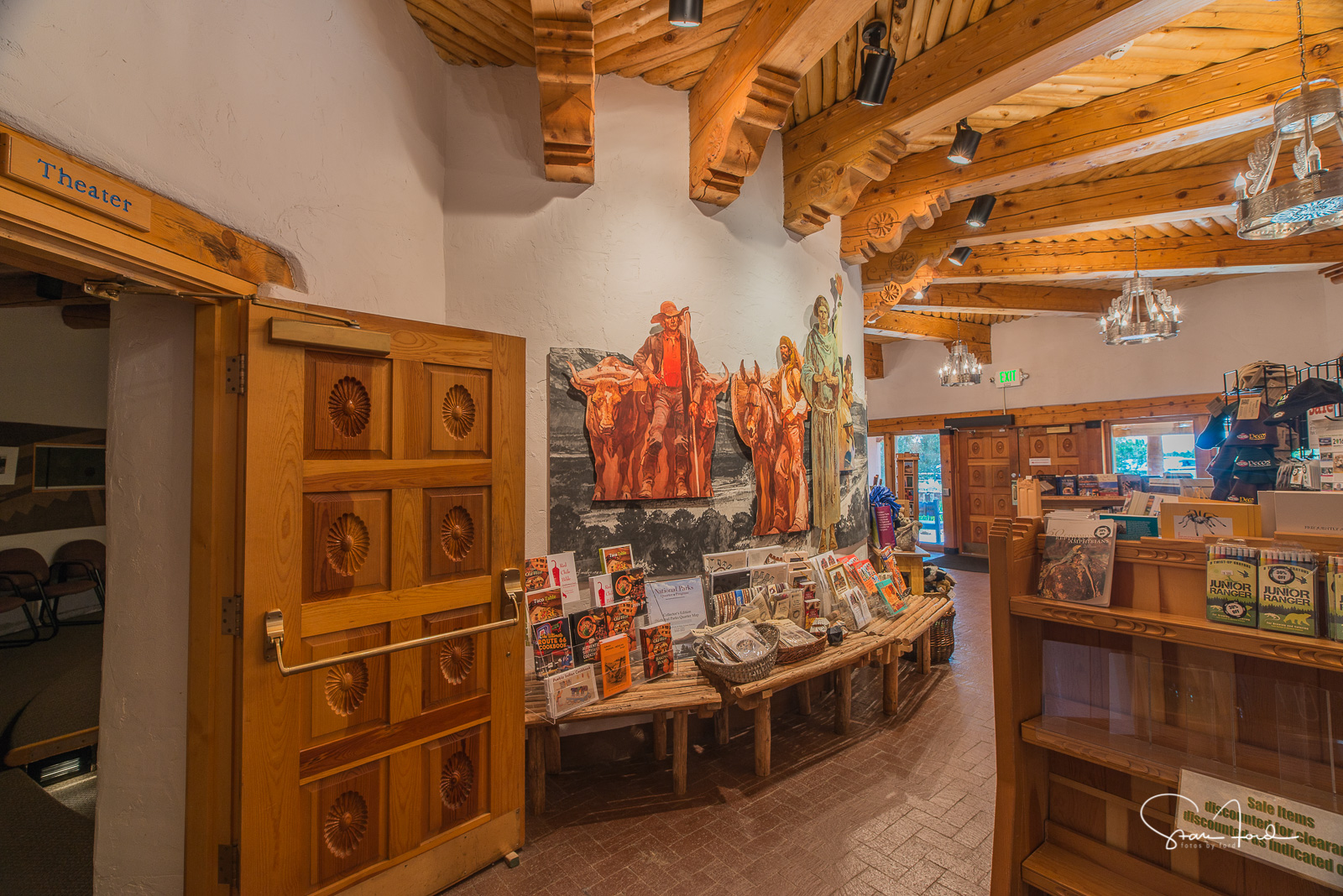
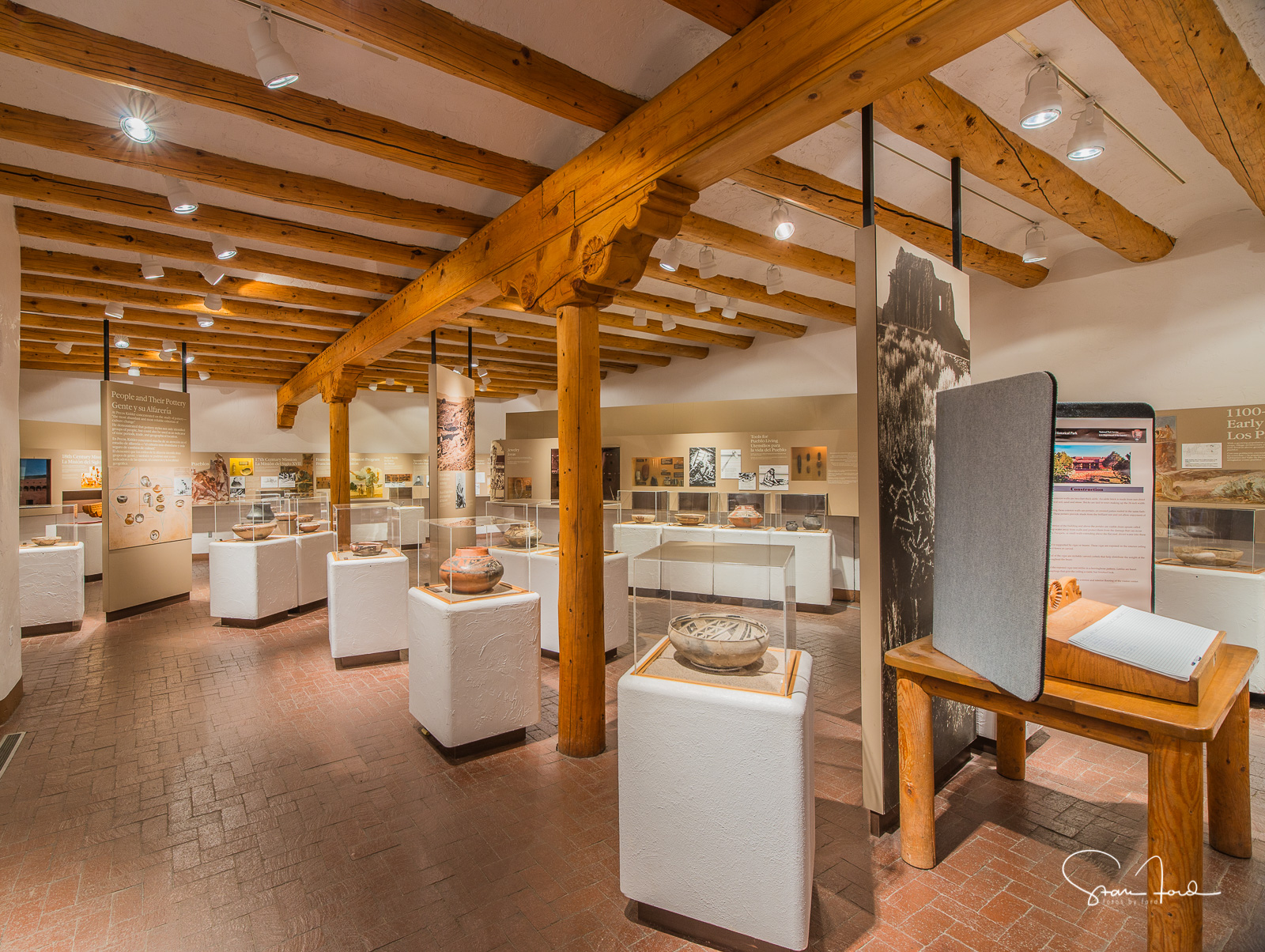
Thousands of years of New Mexico’s rich history are preserved for visitors who are fortunate enough to visit Pecos National Historical Park. This might seem like an overwhelming history lesson, but you don’t have to choose what to see or do, just absorb its immensity while you tour. There is no entrance fee to the park and a good place to begin is the Visitors Center which is being renovated this year with all new exhibits and wall murals by photographer Stan Ford. The center is filled with books, historical and archaeological information. Take time to watch the new introductory film detailing the bounty of the site, from history and archaeology to points of interest.
Directly from the center, depart on a 1 ¼- mile, self-guided loop trail around the site. Before departing, you’ll receive a handy narrative brochure along with a laminated interpretive guide to the ruins you are about to encounter on the trail.
Visit the Pueblo
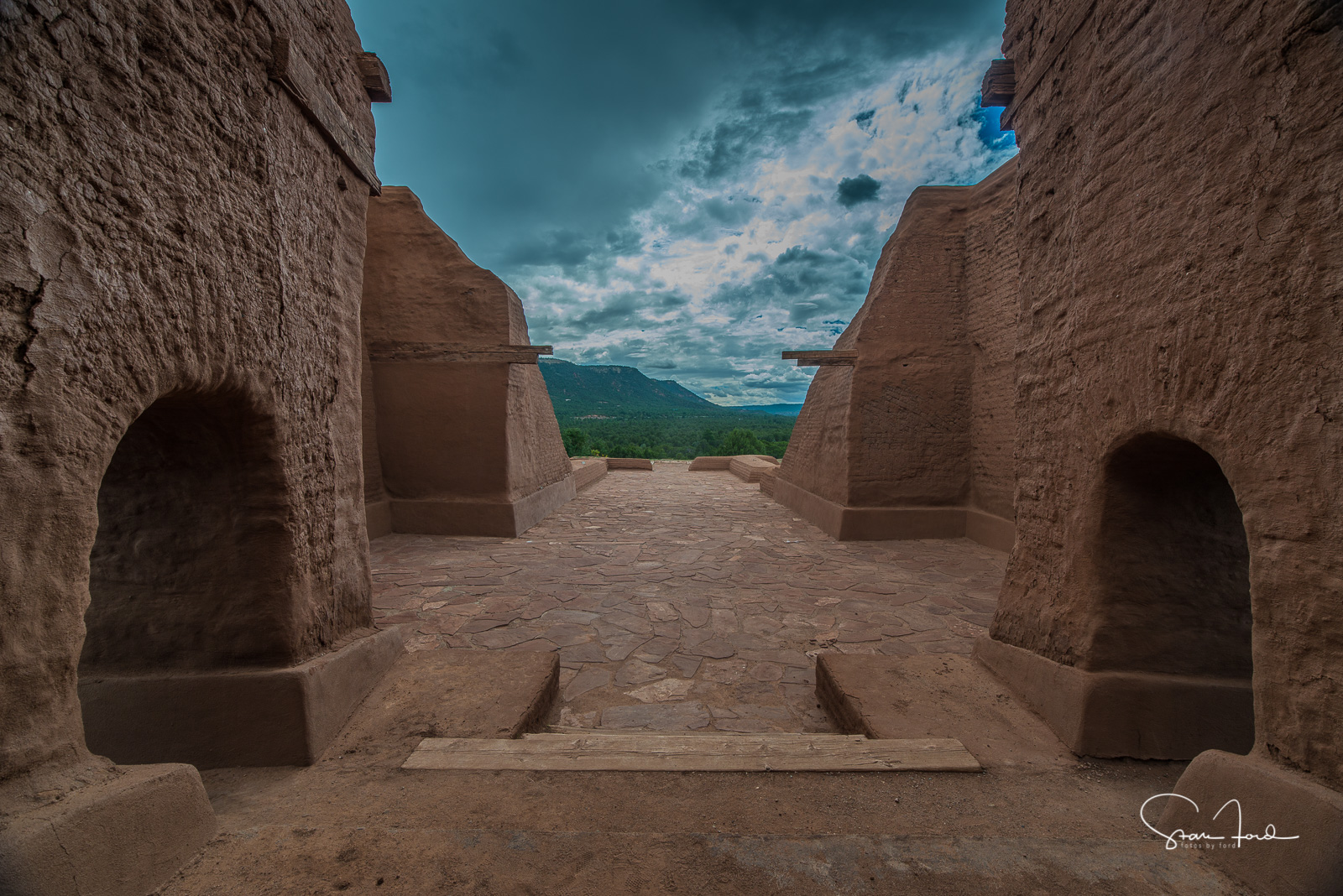
Enveloped in piñon and juniper and backed by the majestic Sangre de Cristo Mountains that have made nearby Santa Fe famous, sits an ancestral pueblo and the remains of an adobe mission—vivid reminders of people who once lived and thrived here. For centuries, the Pecos Pueblo, situated on the Pecos River that flows peacefully through the park, served as an important trading center between the Pueblo people and the Great Plains nations, eventually growing to a population of more than 2,000. But time and colonization eventually whittled the once impressive settlement into the still impressive ruins that stand today.
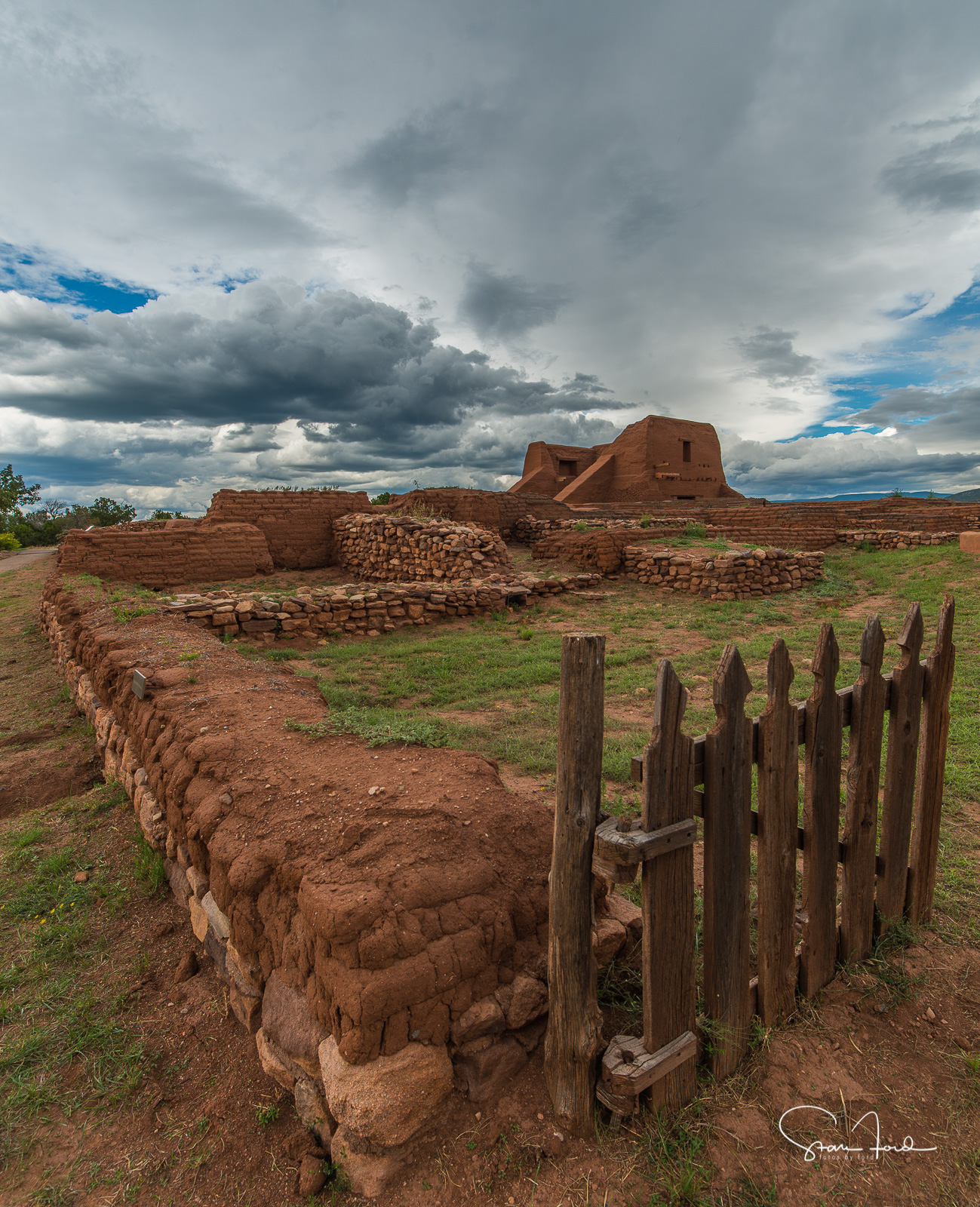
The Pecos Indians were an advanced tribe with a heritage deeply rooted in the Pueblo-an culture of the American Southwest. Like their Pueblo ancestors, the Pecos practiced ancient customs in agriculture, religion, and architecture. Farming was essential to their livelihood. By applying an ancient agricultural technique that had originated in Mexico, the people of Pecos were able to supply most of their diet of corn, beans, and squash. Farming also influenced the architectural design of the Pecos village, and like many Pueblo tribes of the American Southwest, the Pecos built storerooms to set aside food for the winter and check dams to regulate the water that flowed to their crops. Their impressive architecture also included large multi-story houses built above the storerooms using adobe–a mud and straw-based material they mixed and molded together to look like bricks. To protect the village, the Pecos erected a large wall, which according to one Spanish conquistador, was visible from a far distance.
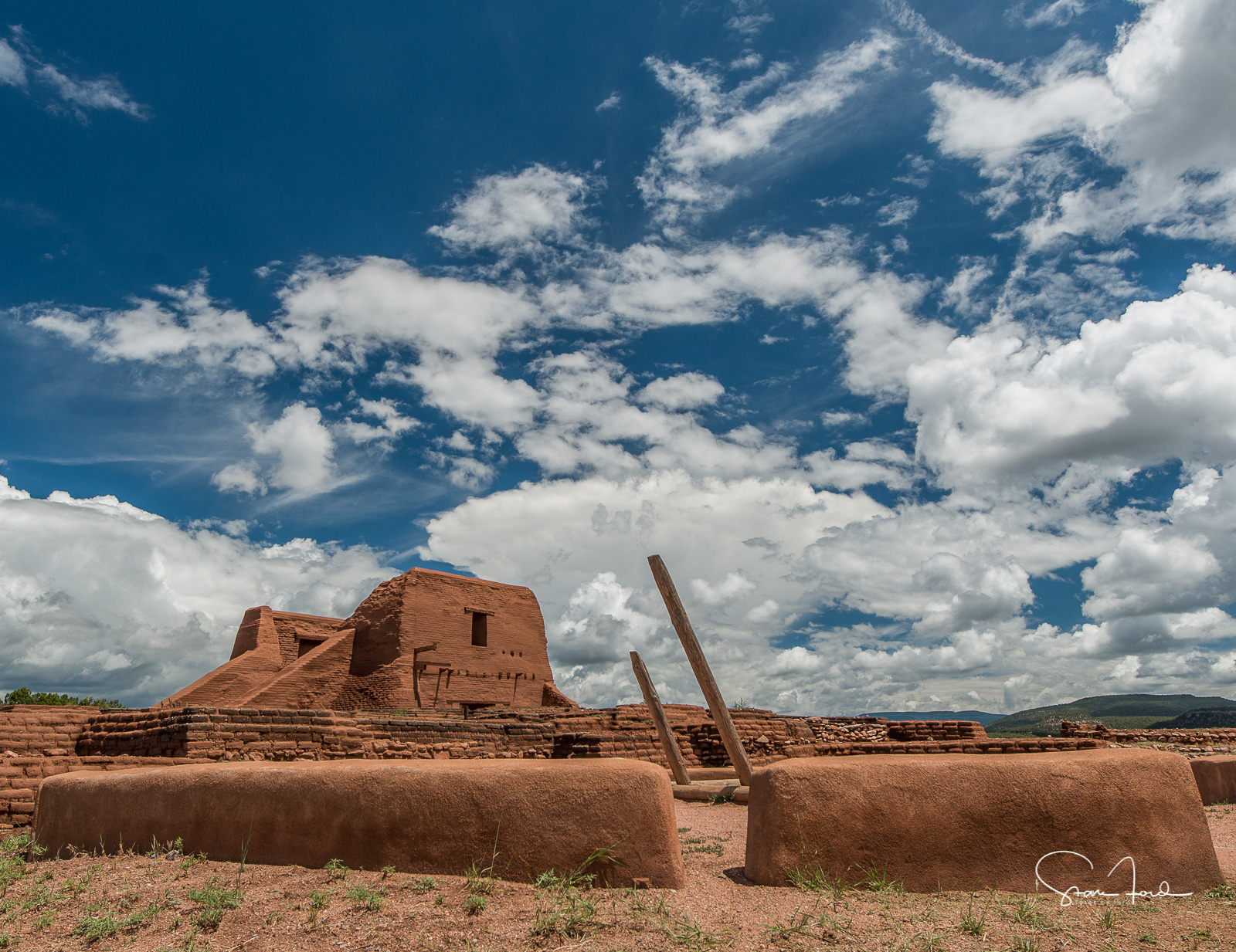
Every August, the Pueblo is the site of Feast Day, a fulfillment of a long-standing promise. Before leaving Pecos Pueblo in 1838, the last inhabitants of the settlement entrusted a special painting to St. Anthony’s Parish. A symbol of the pueblo’s adoption of Christianity as another form of religion, this portrait depicts the patron saint bestowed upon the Mission of Pecos in the 1620s. During Feast Day, Pecos village fulfills its promise to perpetually honor the saint by celebrating a feast day mass in the remains of her final church. Whether visiting for Feast Day or another time, you will witness the on-going restoration work of the church ruins that grant vast vistas over the parkland and provide a unique glimpse into what was once a wealthy town and important trading center, acting as a sort of memorial for a culture nearly forgotten by history. There are various events held during the year, from demonstrations by artisans to nighttime photography workshops led by Stan Ford.
Consider a ranger-led van tour of the archaeological points of interest throughout the park.
Follow the Battlefield Trail
Make time to take the 2-plus mile Civil War hiking trail loop that tells the fascinating story of the Battle of Glorieta Pass, referred to as the “Gettysburg of the West” and the most decisive battle of the New Mexico Campaign. The 1 ½-hour hike reveals the Confederate’s plan for the West that included a march up the Rio Grande, the taking of Santa Fe, then a turn northeast on the Santa Fe Trail to capture the stores at Fort Union, the gold fields of the Colorado and heading west to take California.
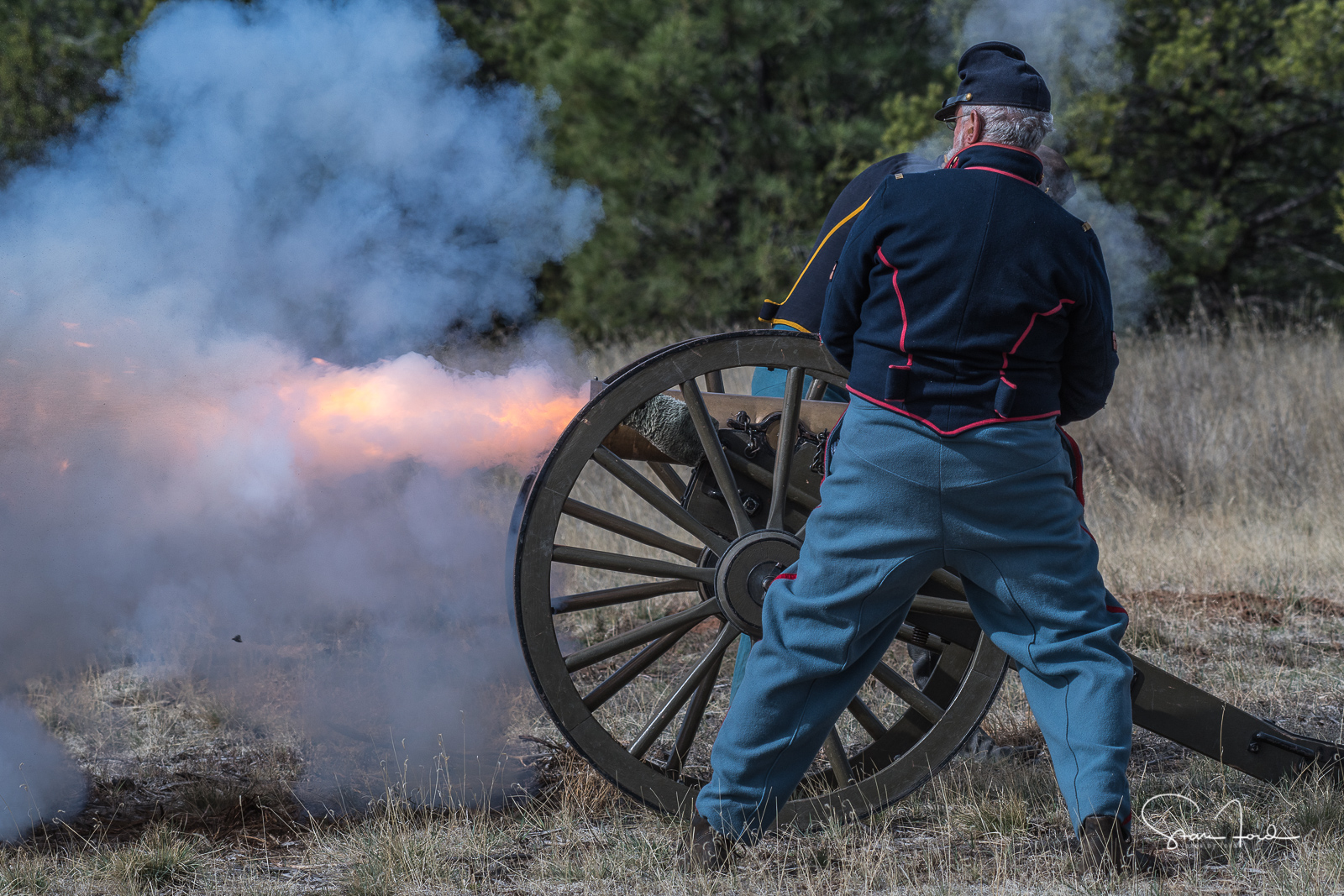
New Mexico, Utah and Colorado were “giant recruiting grounds” for potential enlistees to the Southern cause. All three states had populations loyal to the Confederacy and southern New Mexico had already effectively seceded from the government at Santa Fe and formed a separate territory all the way to California. Capture of these territories would mean more wealth for the Confederacy from the rich mines of Colorado and access to 1,200 miles of California coastline and its ports ripe for European trade.
However, the Union had its own plans. The Battle of Glorieta Pass, fought from March 26–28, 1862, in the northern New Mexico Territory, was the decisive battle of the New Mexico Campaign during the American Civil War. What was intended as the decisive blow by Confederate forces to break the Union possession of the West was fought at Glorieta Pass in what is now Pecos National Park. The surprising and exciting battle resulted in the Confederate withdrawal from the entire territory.
For a colorful tour of the historic Civil War battle, join a ranger for a van tour to several key battle locations scattered throughout the park.
Legendary Hollywood history
More current history, but not less fascinating is the restored ranch that first belonged to Tex Austin, a self-proclaimed cowboy who wanted to deliver city folks a taste of the Old West on his dude ranch nestled along the Pecos River. In 1925, Austin purchased parcels of land on the old Pecos Pueblo Grant and named his 5,500-acre property The Forked Lightning Ranch which was a working cattle ranch. He commissioned a spacious home to accommodate guests with nine guest rooms, built by noted architect John Gaw Meem. For only $125 a week, dude ranch visitors could be a part of cattle drives and the Old West.
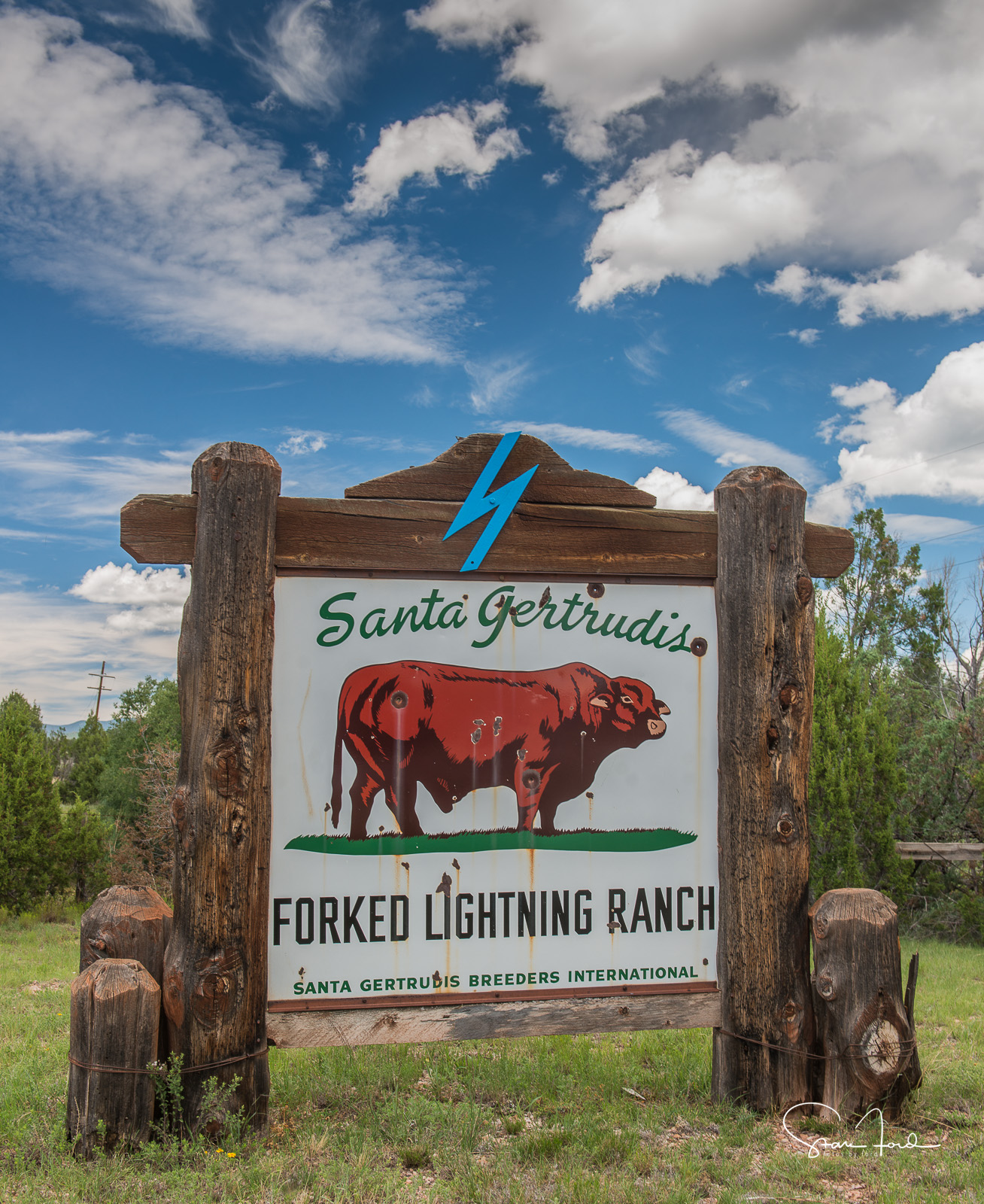
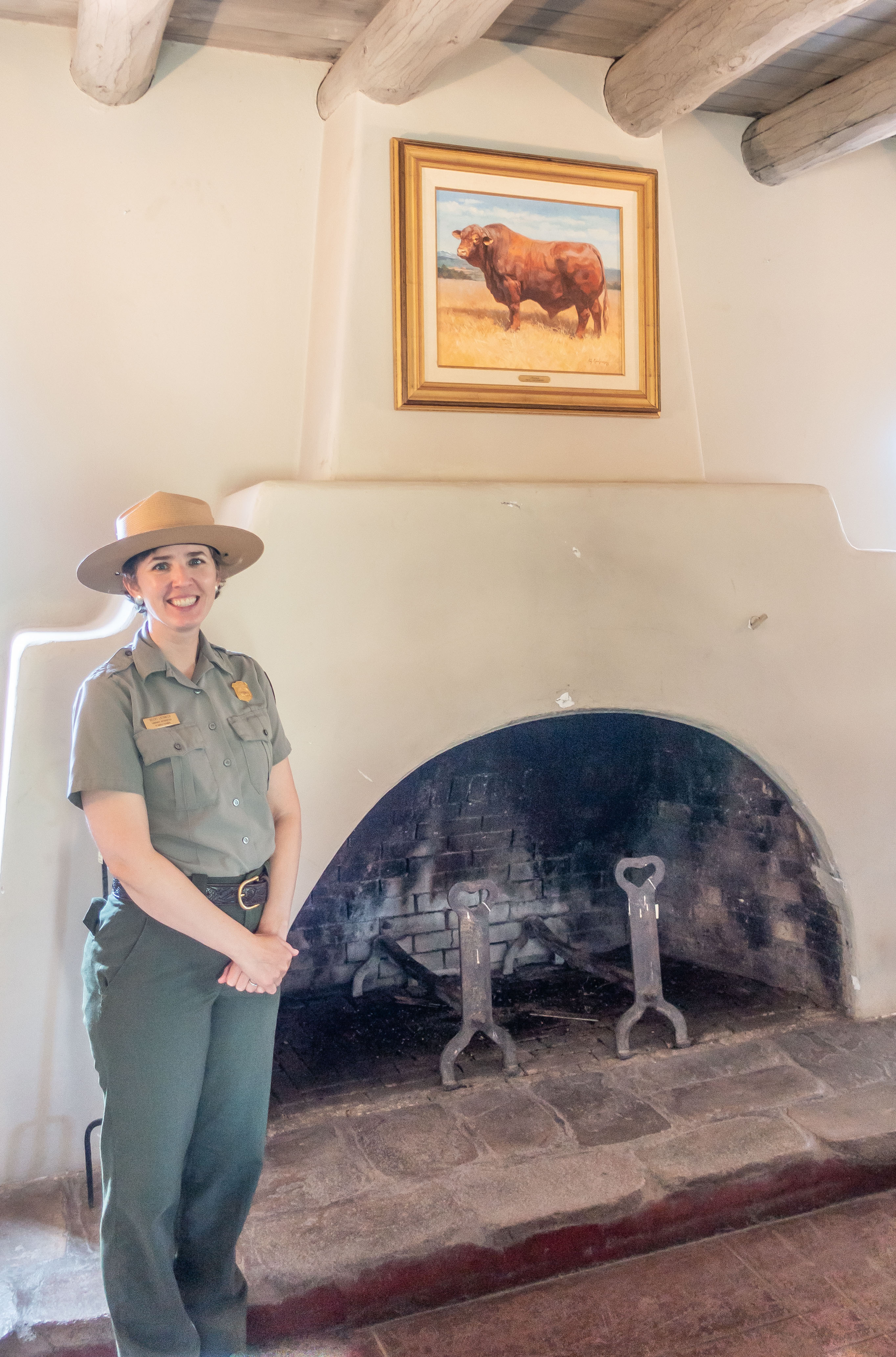
The ranch did not pay Austin’s bills, forcing him to sell the property. The new owners were Oscar-winning actress Greer Garson and her Dallas oilman husband, E.E. Buddy Fogelson. The former dude ranch became the summer residence of the couple who continued to keep the cattle business and entertain Hollywood and Texan friends lavishly. Greer’s passion for the ranch surprised many. She was very involved in the ranch workings, right down to her vision of an “all-white” cattle breed that did not work out. However, she attended a cattle auction in 1958 that resulted in her acquisition of a purebred Santa Gertrudis bull and heifers which became the foundation of the ranch’s herd.
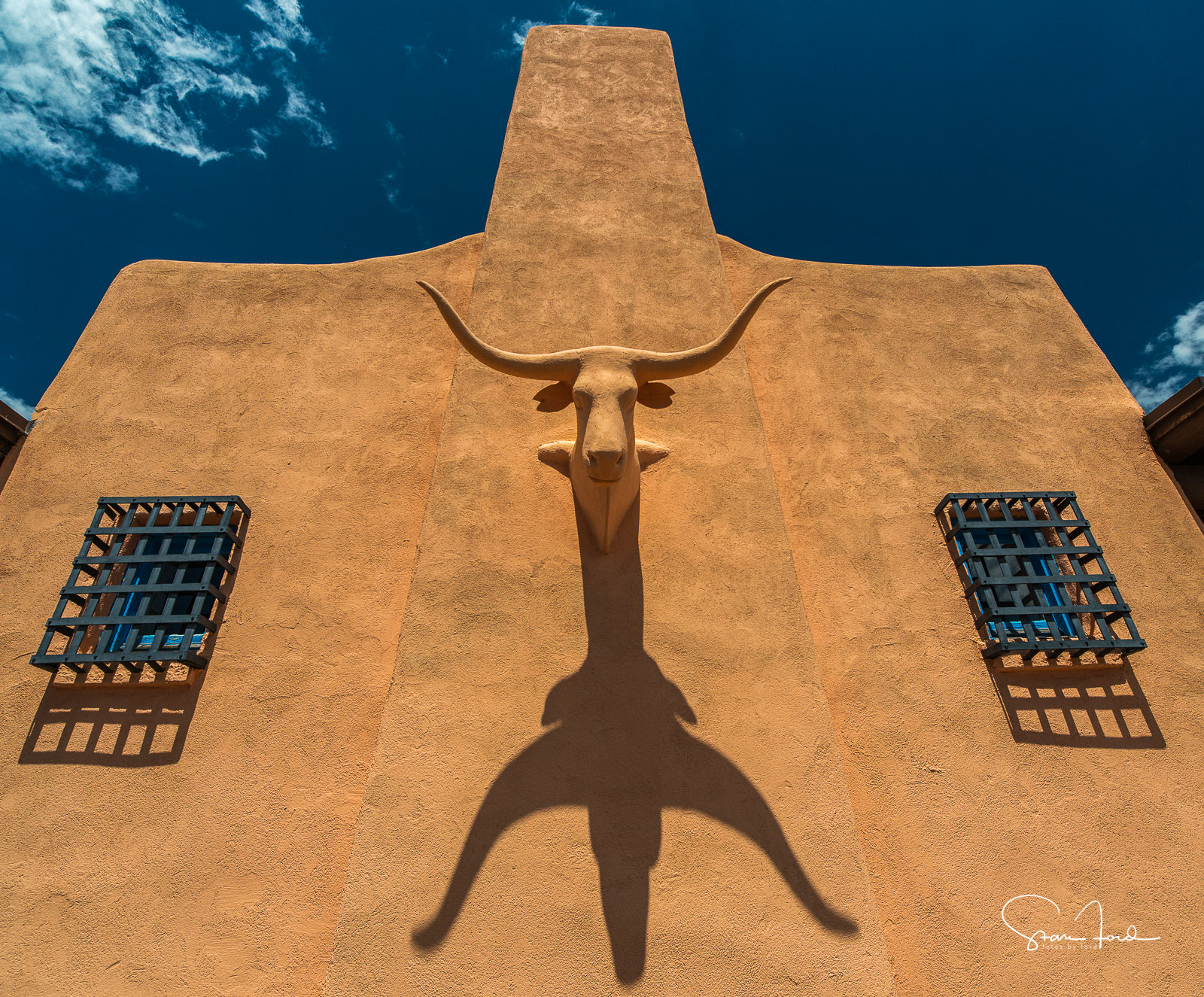
A tour of the ranch, a living museum, is a salute to Hollywood and New Mexico’s ranching heritage. See the rooms, hear the stories and imagine life on the rancho that has been a gathering place for nearly a century.
Fish on the Pecos River
Three miles of the Pecos River runs through the park and fishing is allowed by reservation during certain times of the year. Find more details here.
Photos by Stan Ford, fotosbyford.com Text by Kathy Strong